
从一句需求到 requirements.md
复杂需求开始前,最不该省的是 requirements.md。
不是因为文档重要,而是因为需求如果没有变成可验证的行为合同,AI 会在实现过程中自己补空白。
一句话需求:
已支付订单不能直接取消,要走退款。
听起来清楚,其实不够。它没有说明 pending 订单怎么办,shipped 订单怎么办,退款失败怎么办,旧接口返回结构能不能变,管理后台是不是同一规则,历史订单是否迁移。
requirements.md 的目的,就是把这些隐含问题在写代码前摊开。
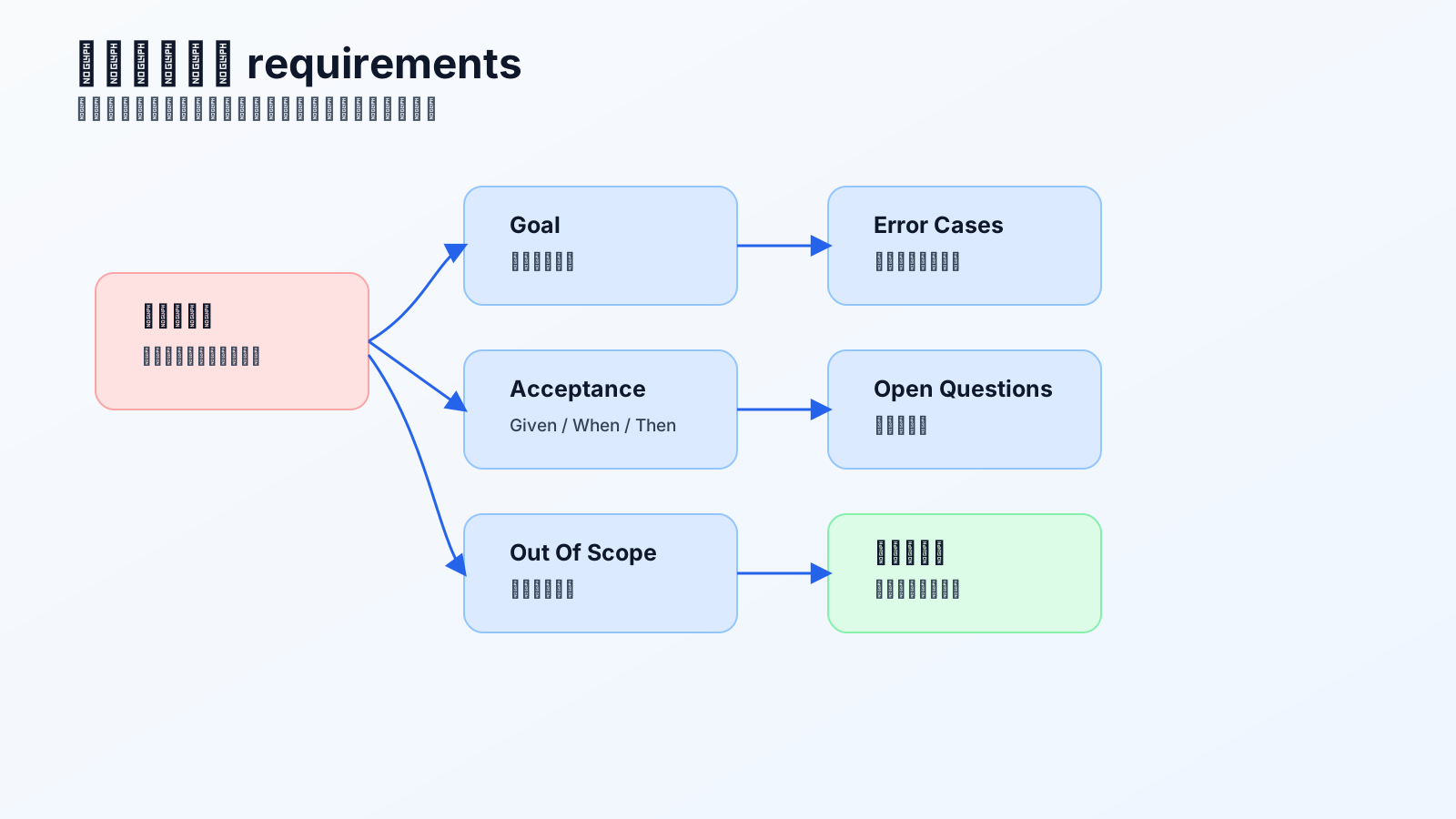
requirements.md 写什么,不写什么
requirements.md 写行为,不写实现。
它要回答:
- 谁在什么场景下触发。
- 系统应该表现出什么行为。
- 哪些旧行为必须保留。
- 哪些异常路径必须处理。
- 哪些内容不在本次范围。
- 怎么判断需求完成。
- 哪些问题还需要确认。
它不应该写:
- 改哪个函数。
- 新增哪个 if。
- 抽什么类。
- 用哪个数据库字段。
- 怎么拆 task。
这些属于 design.md 和 tasks.md。
把技术方案写进 requirements,容易让需求合同变形。后面如果实现方案变了,需求也跟着乱。
一个坏的 requirements 长什么样
坏版本:
# Requirements

已支付订单不能直接取消,要在 `cancelOrder` 里面判断 paid 状态,然后调用退款服务。
如果是 pending 就照旧,如果是 shipped 就报错。
这段话看起来很具体,但问题很多。
第一,它直接指定了实现位置和实现方式。
第二,它没有说明返回给用户的行为。
第三,它没有定义退款服务失败怎么办。
第四,它没有说明旧接口返回结构是否保持。
第五,它没有说明验收条件。
更好的版本:
# Requirements

## Goal

用户取消已支付订单时,系统不应直接取消订单,而应进入退款申请流程。

## Acceptance Criteria

- pending 订单取消后状态为 canceled。
- paid 订单取消后状态为 refund_requested。
- shipped 订单取消仍按现有规则拒绝。
- API response shape remains compatible with existing clients.

## Error Cases

- If refund request creation fails, order status must remain paid.
- User should receive a retryable error message.

## Out Of Scope

- Payment provider callback behavior.
- Historical order data migration.
- Admin batch cancellation.

## Open Questions

- Should paid order cancellation create refund request synchronously or asynchronously?
这才是需求合同。
从一句话需求拆成六块
一份可用的 requirements.md 通常包括六块。
Goal
Actors / Scenarios
Acceptance Criteria
Error Cases
Out Of Scope
Open Questions
不是每个需求都要六块都很长,但这六块能防止 Agent 漏掉关键边界。
Goal
Goal 写一句清楚的行为目标。
差:
优化订单取消。
好:
用户取消已支付订单时,系统进入退款申请流程,而不是直接取消订单。
Goal 不写技术方案。
Actors / Scenarios
写谁在什么场景下触发。
## Scenarios

- Buyer cancels a pending order before payment.
- Buyer cancels a paid order before shipping.
- Buyer cancels a shipped order.
- Support agent cancels an order from admin console.
如果不同角色规则不同,要写出来。否则 Agent 可能把用户端规则套到管理后台。
Acceptance Criteria
验收条件要可验证。
差:
- 订单取消逻辑正确。
好:
- Given a pending order, when user cancels, then status becomes canceled.
- Given a paid order, when user cancels, then status becomes refund_requested.
- Given a shipped order, when user cancels, then existing rejection behavior remains unchanged.
Given/When/Then 的价值不在格式,而在强迫你写出前置状态、动作和结果。
Error Cases
异常路径不能留给实现时猜。
## Error Cases

- If refund request creation fails, order status remains paid.
- If duplicate cancel request arrives, no duplicate refund request is created.
- If payment provider is unavailable, user receives retryable error.
很多线上 bug 都出在异常路径。AI 如果只看 happy path,会写出表面可用的实现。
Out Of Scope
非目标是 requirements.md 里最重要但最容易漏的部分。
## Out Of Scope

- Do not change payment provider callback logic.
- Do not migrate historical order data.
- Do not change admin batch cancellation.
- Do not change public API response shape.
非目标告诉 Agent 这次不改什么。没有它,AI 很容易“顺便”做大。
Open Questions
不确定的问题要显式列出来。
## Open Questions

- Should paid cancellation create refund request synchronously?
- Should support agents bypass the buyer-side restriction?
- What error copy should be shown when refund request creation fails?
Open Questions 的价值是暂停,而不是让 Agent 自己决定。
把现有行为和新行为分开写
生产需求里,最容易出问题的不是“新行为没实现”,而是旧行为被顺手改坏。
所以 requirements 里建议加一张行为表,尤其是状态机、权限、接口兼容类需求。
## Behavior Matrix

| Scenario | Current Behavior | Expected Behavior |
| --- | --- | --- |
| pending order cancel | status becomes `canceled` | unchanged |
| paid order cancel | status becomes `canceled` | status becomes `refund_requested` |
| shipped order cancel | rejected with `ORDER_ALREADY_SHIPPED` | unchanged |
| duplicate paid cancel | may create duplicate side effect | no duplicate refund request |
这张表对 Agent 很有用。它能明确哪些路径要改,哪些路径不能动。
它对 reviewer 也有用。review diff 时,不只看 paid 分支,还会看 pending、shipped 和 duplicate 路径有没有测试覆盖。
很多“AI 改坏旧逻辑”的问题,本质上是 requirements 没有把旧行为写成约束。Agent 看到新目标后,会自然围绕新目标重组代码。如果旧行为没有被写进合同,它就不一定知道哪些东西不能碰。
需求确认不是让产品补文档
个人 AI Coding 场景里,很多需求来自自己、同事、issue 或线上问题。你不一定有完整 PRD,也不应该为了写 requirements 去发起一轮重流程。
可执行的做法是:让 Agent 先根据现有材料生成草稿,然后你把不确定点发给相关人确认。
比如:
Need confirmation:

1. Paid cancellation should create refund request synchronously or asynchronously?
2. Support agent cancellation follows buyer-side rule or has override permission?
3. Existing mobile clients can display `refund_requested` or need fallback copy?
这三条比“请确认订单取消需求”有效得多。它们直接指向实现会分叉的地方。
如果没有产品或业务方可以确认,也要把决定写清楚:
Decision:
- For this change, buyer cancellation creates refund request synchronously.
- Support agent cancellation remains out of scope.
- Mobile fallback display will be handled in a separate change.

Reason:
- Current refund service already exposes synchronous create API.
- No admin batch cancellation requirement is confirmed.
这不是形式主义。它是在给未来的代码审查和线上问题留证据。
线上 bug 的 requirements 怎么写
很多程序员觉得只有新需求才需要 requirements,线上 bug 直接修就行。AI Coding 里,这个想法很容易出问题。
比如线上报警:
用户重复点击取消订单后,出现两条退款申请。
如果直接让 Agent 修,它可能只在按钮上加防重复点击,也可能只在接口里加锁,还可能改测试让它通过。真正需要先写清楚的是:重复请求在系统层面应该如何表现。
可以写成:
# Requirements: duplicate paid cancellation is idempotent

## Goal

When a buyer repeats paid order cancellation, the system must not create duplicate refund requests.

## Current Behavior

- Duplicate cancel requests may create multiple refund requests.
- Existing pending order cancellation is not part of this bug.

## Acceptance Criteria

- Given a paid order with no refund request, when buyer cancels once, then one refund request is created.
- Given a paid order with an existing refund request, when buyer cancels again, then no new refund request is created.
- Given a duplicate request, response shape remains compatible with existing clients.

## Error Cases

- If refund request lookup fails, order status remains unchanged.

## Out Of Scope

- Do not change UI button debounce in this fix.
- Do not change payment provider callback behavior.
- Do not migrate historical duplicate refund records.
这份 requirements 把修复范围限定在后端幂等行为。UI 防重复点击可以作为后续增强,但不能代替服务端幂等。
这就是 requirements 的价值:它先定义正确行为,再让 design 决定技术手段。
需求合同检查矩阵
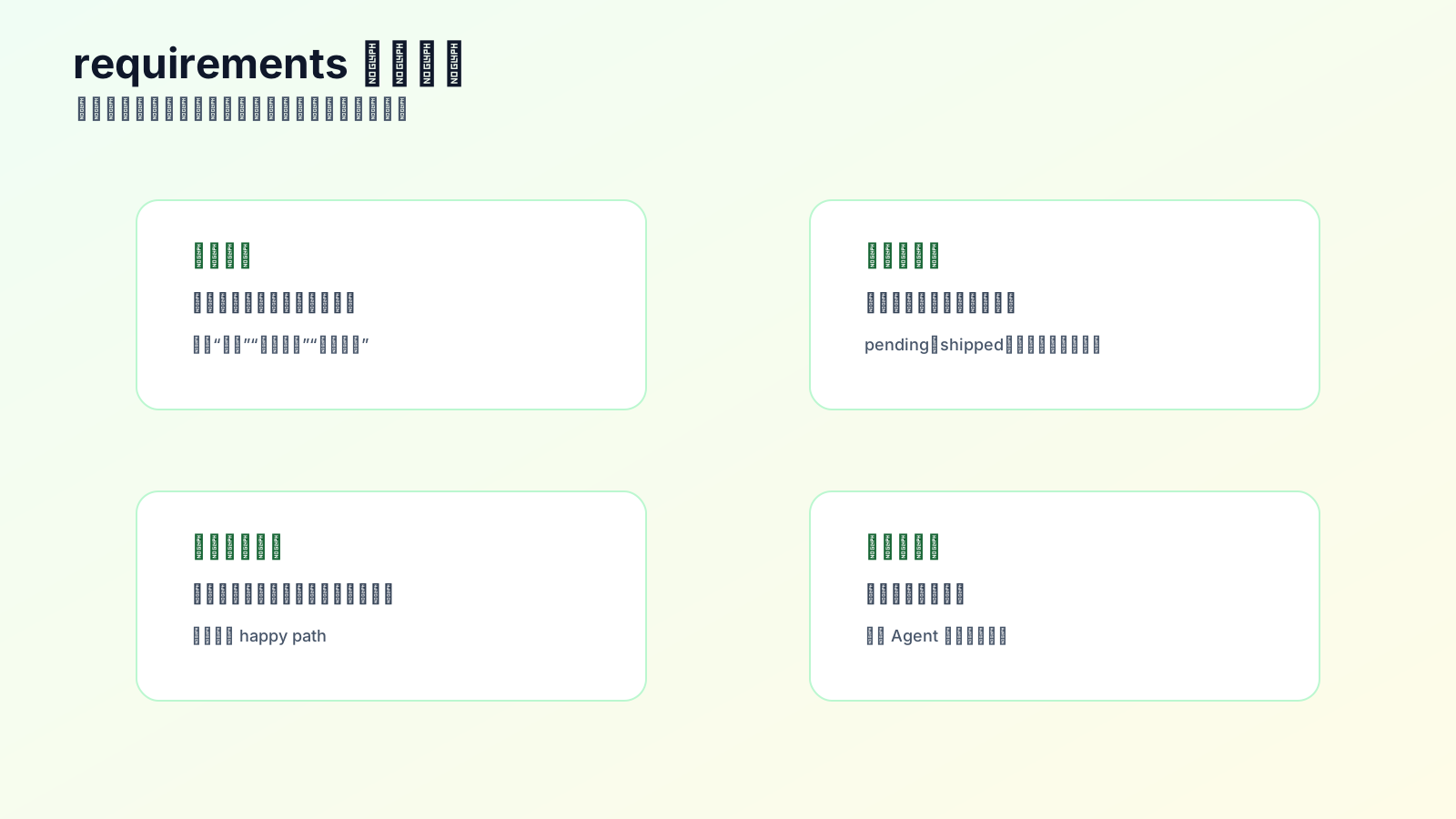
写完 requirements.md 后,用四个维度检查。
第一,行为是否具体。
能不能从文字直接写出测试?如果不能,说明还太虚。
第二,旧行为是否保留。
新需求通常只改变一部分路径。哪些旧行为不变必须写出来。
第三,异常路径是否覆盖。
失败、重复、并发、权限、外部系统不可用,这些是否需要说明。
第四,非目标是否明确。
不在本次范围的东西,如果不写,Agent 可能当成优化空间。
让 AI 帮你写 requirements 草稿
AI 很适合把原始需求整理成 requirements 草稿,但不要让它直接写成最终合同。
可以这样提示:
先不要写代码。

请把下面需求整理成 requirements.md 草稿:

需求:
已支付订单不能直接取消,要走退款。

要求:
- 只写用户可见行为和业务验收条件。
- 不写技术实现方案。
- 使用 Goal / Scenarios / Acceptance Criteria / Error Cases / Out Of Scope / Open Questions。
- 不确定的地方写 Open Questions,不要自行决定。
然后你要审。
重点看:
- 是否把实现写进了 requirements。
- 是否遗漏旧行为。
- 是否把未确认规则写成确定事实。
- 是否缺异常路径。
- 是否缺非目标。
AI 可以生成草稿,但需求合同必须人确认。
一个完整 requirements 示例
下面是订单取消改退款的完整版本。
# Requirements: paid order cancellation enters refund flow

## Goal

When a buyer cancels a paid order before shipping, the system should create a refund request instead of directly canceling the order.

## Scenarios

- Buyer cancels a pending order before payment.
- Buyer cancels a paid order before shipping.
- Buyer cancels a shipped order.
- Buyer repeats a cancel request for the same paid order.

## Acceptance Criteria

- Given a pending order, when the buyer cancels it, then the order status becomes `canceled`.
- Given a paid order, when the buyer cancels it, then the order status becomes `refund_requested`.
- Given a shipped order, when the buyer cancels it, then the existing shipped-order rejection remains unchanged.
- Given a repeated cancel request for a paid order with an existing refund request, then no duplicate refund request is created.
- Existing API response shape remains compatible with current clients.

## Error Cases

- If refund request creation fails, the order status remains `paid`.
- If payment provider is temporarily unavailable, the user receives a retryable error.

## Out Of Scope

- Payment provider callback handling.
- Historical order data migration.
- Admin batch cancellation.
- Changing public API response shape.

## Open Questions

- Should refund request creation be synchronous or asynchronous?
- What user-facing copy should appear when refund request creation fails?
- Should support agents follow the same rule as buyers?
这份 requirements 没有说改哪个函数。它只定义行为。
requirements 通过后,design.md 才有明确输入:根据当前代码结构决定在哪里实现、如何保持兼容、风险在哪里。
验收条件怎么写得可测试
验收条件写得好不好,看它能不能变成测试。
差:
- 系统应该正确处理已支付订单。
这句话没法直接测试。
好:
- Given a paid order, when the buyer cancels it, then the order status becomes `refund_requested`.
它能直接变成测试用例:
setup paid order
call cancel
assert status refund_requested
再比如:
- Given refund request creation fails, when buyer cancels a paid order, then order status remains `paid`.
这能直接变成失败注入测试。
如果一个验收条件不能变成测试、截图、接口调用或人工检查步骤,它就还不够清楚。
非目标怎么写
非目标不要写成“暂不考虑性能”这种空话。
要写具体边界:
## Out Of Scope

- Do not change payment provider callback behavior.
- Do not change admin batch cancellation.
- Do not migrate historical order data.
- Do not change public API response shape.
非目标有两个作用。
第一,它保护现有系统。 第二,它让 tasks 可以拆得更小。
如果非目标没写,Agent 很可能把“支付回调也顺便改一下”当成合理方案。
Open Questions 不要怕多
Open Questions 是好东西。
它说明你没有把不确定性伪装成确定结论。
比如:
## Open Questions

- Refund request creation should be sync or async?
- Should support agents follow buyer-side cancel restriction?
- What happens when refund provider returns a duplicate request error?
如果这些问题影响实现,就先确认;如果不影响第一步,可以写进 design 的风险和 tasks 的后续项。
AI Coding 里,真正危险的是没有 Open Questions。那通常意味着 Agent 自己在替你做业务决定。
requirements 和测试的关系
requirements.md 不是测试文件,但它应该天然能推导出测试。
可以在 requirements 末尾加一段:
## Verification Ideas

- Unit test: pending order cancel remains canceled.
- Unit test: paid order cancel creates refund_requested.
- Unit test: shipped order cancel remains rejected.
- Unit test: duplicate paid cancel does not create duplicate refund request.
- API compatibility check: response shape unchanged.
这不是 tasks.md,只是提示后续测试方向。
真正的测试命令和实现顺序放到 tasks。
让 Agent 生成 requirements 时,要给它证据边界
不要只说“帮我写 requirements”。这会让 Agent 按常识补业务规则。
更合适的输入是:
请生成 requirements.md 草稿,不要写代码。

可用证据:
- 用户需求:已支付订单不能直接取消,要走退款。
- 当前代码:请先搜索订单取消入口、订单状态枚举、相关测试。
- 只能把源码、测试和需求中能确认的内容写成事实。
- 不确定的业务规则写进 Open Questions。

输出要求:
- 每条 Current Behavior 带文件路径。
- Acceptance Criteria 使用 Given/When/Then。
- Out Of Scope 写清不能改的模块和行为。
这里的关键不是模板,而是证据边界。
Agent 可以搜索代码,可以读取测试,可以根据需求生成候选验收条件。但它不能把“常见电商系统通常怎么做”写成你项目的事实。
审草稿时,重点看两类句子。
第一类是没有来源的确定句:
Refund request should be created asynchronously.
如果原始需求和源码都没支持这个结论,它应该改成 Open Question。
第二类是过度抽象句:
System should improve cancellation experience.
这句话不能测试,应该改成状态、响应、页面行为或错误码。
requirements 通过前,不要进入 design
有些需求看起来急,容易直接跳到设计。但 requirements 没过,design 越详细越危险。
进入 design 前,至少确认这些问题:
新行为是否能写成测试?
旧行为是否写进合同?
异常路径是否有期望结果?
非目标是否具体到模块、接口或行为?
Open Questions 里是否还有会影响实现路径的问题?
如果还有会影响实现的问题,比如“退款同步还是异步”“后台是否同规则”“新增状态老客户端能否识别”,就不要让 Agent 设计方案。
可以先做两件事:
- 让 Agent 搜索现有代码,补齐 Current Behavior。
- 把业务决策问题发给人确认。
这比让 Agent 在 design 里自作主张要便宜得多。
PR 里怎么呈现 requirements
requirements 不一定要完整贴进 PR 描述,但 PR 需要能追溯到它。
可以这样写:
Requirement summary:
- paid order cancellation now enters refund flow
- pending and shipped cancellation behavior unchanged
- response shape unchanged

Spec:
- `docs/specs/order-cancel-refund/requirements.md`

Verification mapped from requirements:
- pending cancel regression test
- paid cancel refund_requested test
- shipped cancel existing error test
- duplicate paid cancel idempotency test
reviewer 不需要读很长的需求文档,也能知道这次行为合同是什么。
对 AI Coding 来说,这一步还有另一个价值:后续让 Agent 做 code review 或补测试时,它可以直接拿 PR 描述和 requirements 对照,而不是重新猜需求。
状态值、错误码和字段名要引用真实系统
requirements 写行为,但并不意味着它可以随便命名状态和错误码。
如果当前系统里订单状态叫 PAID、CANCELLED,你在 requirements 里写 paid、canceled 只是示意没有问题;但进入真实任务时,状态值必须和代码、接口或数据库一致。
可以要求 Agent 先查这些材料:
请先搜索:
- order status enum
- cancel related error codes
- public API response schema
- existing order cancel tests

输出 requirements 草稿时:
- 业务描述用自然语言。
- 状态值、错误码、字段名使用源码里的真实名字。
- 找不到的名字不要发明,写到 Open Questions。
这能避免一个很隐蔽的问题:requirements 看起来对,但实现时 Agent 为了匹配文档新增了一套不该存在的命名。
比如系统里已有错误码:
ORDER_ALREADY_SHIPPED
ORDER_CANCEL_NOT_ALLOWED
requirements 就不要写成:
- shipped order returns `SHIPPED_ORDER_ERROR`.
应该写:
- shipped order still returns existing `ORDER_ALREADY_SHIPPED` error.
这句话同时表达了两个约束:错误码真实存在,并且本次不改。
需求质量不够时,Agent 会怎么误解
看一个更贴近真实工作的例子:
把会员到期提醒做一下,别让用户错过续费。
这句话如果直接交给 Agent,至少会出现这些分叉:
- 到期前几天提醒?
- 站内信、短信、邮件、App push 哪些渠道?
- 免费会员、付费会员、企业会员是否一样?
- 已取消自动续费的用户是否提醒?
- 多次提醒是否去重?
- 发送失败是否重试?
- 法务和隐私策略是否允许发送?
如果 requirements 只写“用户到期前收到提醒”,实现就会非常随意。
更合适的写法是先把范围压住:
## Goal

Paid individual members should receive one in-app reminder 7 days before membership expiration.

## Acceptance Criteria

- Given a paid individual member expires in 7 days, when daily reminder job runs, then one in-app reminder is created.
- Given reminder already exists for the same expiration cycle, when job runs again, then no duplicate reminder is created.
- Given enterprise member, when job runs, then no reminder is created in this change.

## Out Of Scope

- SMS, email, and push notifications.
- Enterprise membership reminder.
- Auto-renew payment retry.
- Marketing campaign copy.
这段 requirements 没有解决所有续费问题,但它把这次变更定义清楚了。Agent 可以围绕“个人付费会员、站内信、7 天、一次、去重”去搜索和实现。
程序员写 requirements,不是为了把需求说得宏大,而是把这次要改的行为压到可执行范围。
常见错误
错误一:把技术实现写进需求。
需求写行为,技术方案写 design。
错误二:只有 happy path。
复杂需求必须写 error cases。尤其是外部系统失败、重复请求、并发和权限。
错误三:没有非目标。
非目标不写,Agent 容易扩大范围。
错误四:验收条件不可测试。
“体验更好”“逻辑正确”都不可测试。改成状态、响应、页面行为或命令结果。
错误五:把不确定问题写成确定规则。
不确定就写 Open Questions,先确认。
常见问题
requirements 要不要写中文还是英文?
看团队习惯。代码标识、状态值、错误码、命令保留英文;业务描述用中文也可以。关键是可测试、可追溯,不是语言选择。
如果需求来自线上 bug,requirements 还要写吗?
要写,但可以短。线上 bug 也需要定义“修复后应该是什么行为”“哪些旧行为不能变”“怎么证明没复发”。否则很容易只修当前报错路径。
验收条件是不是越多越好?
不是。验收条件要覆盖会改变结果的路径。重复写同一类场景会增加噪音。优先写状态分支、权限分支、异常路径、兼容性分支。
Open Questions 会不会显得需求没想清楚?
不会。Open Questions 是把不确定性显式暴露。真正危险的是没确认就让 Agent 默认选择一个实现。
requirements 变了,后面的 design 和 tasks 怎么办?
需要同步更新。尤其是 Acceptance Criteria、Out Of Scope、Error Cases 变化时,design 的方案和 tasks 的验证命令都可能要重拆。
可以直接复用的模板
# Requirements: <change name>

## Goal

<One sentence describing the behavior change.>

## Scenarios

- <Actor + situation>

## Acceptance Criteria

- Given <state>, when <action>, then <observable result>.

## Error Cases

- If <failure>, then <expected behavior>.

## Out Of Scope

- <What this change must not touch.>

## Open Questions

- <Question that needs human confirmation.>

## Verification Ideas

- <Test, command, screenshot, API call, or manual check idea.>
第一次写不要追求完美。先写出 Goal、Acceptance Criteria、Out Of Scope。复杂需求再补 Error Cases 和 Open Questions。
迁移建议
下次遇到一句模糊需求,先不要让 AI 改代码。让它生成 requirements.md 草稿,然后你只审三件事:
- 行为是否可测试。
- 旧行为是否保留。
- 非目标是否明确。
如果这三件事过不了,就不要进入 design。
requirements.md 写清后,design.md 才有基础。需求合同只定义要什么,设计文档要回答怎么在当前代码库里改,怎么控制兼容性、数据流、架构边界和验证风险。
还有一种情况要直接拒绝继续:需求本身要求绕过现有安全、权限、审计或合规边界,但没有明确授权。
比如:
临时让所有客服都能取消已支付订单,先上线再说。
这不能直接写成 Acceptance Criteria。至少要先确认:
- 哪些角色可以取消。
- 是否需要操作日志。
- 是否影响退款审批。
- 是否需要灰度或开关。
- 现有权限测试是否要保留。
AI Coding 的速度越快,越不能把权限和审计当成实现细节。requirements 阶段发现这类问题,就应该停在 Open Questions,而不是让 design 替业务和安全决策背书。
可复查资料
- GitHub Spec Kit 官方文档:https://github.github.com/spec-kit/
- GitHub Spec Kit 仓库:https://github.com/github/spec-kit
- GitHub Blog: Spec-driven development with AI:https://github.blog/ai-and-ml/generative-ai/spec-driven-development-with-ai-get-started-with-a-new-open-source-toolkit/
- OpenSpec 官方站:https://openspec.dev/